
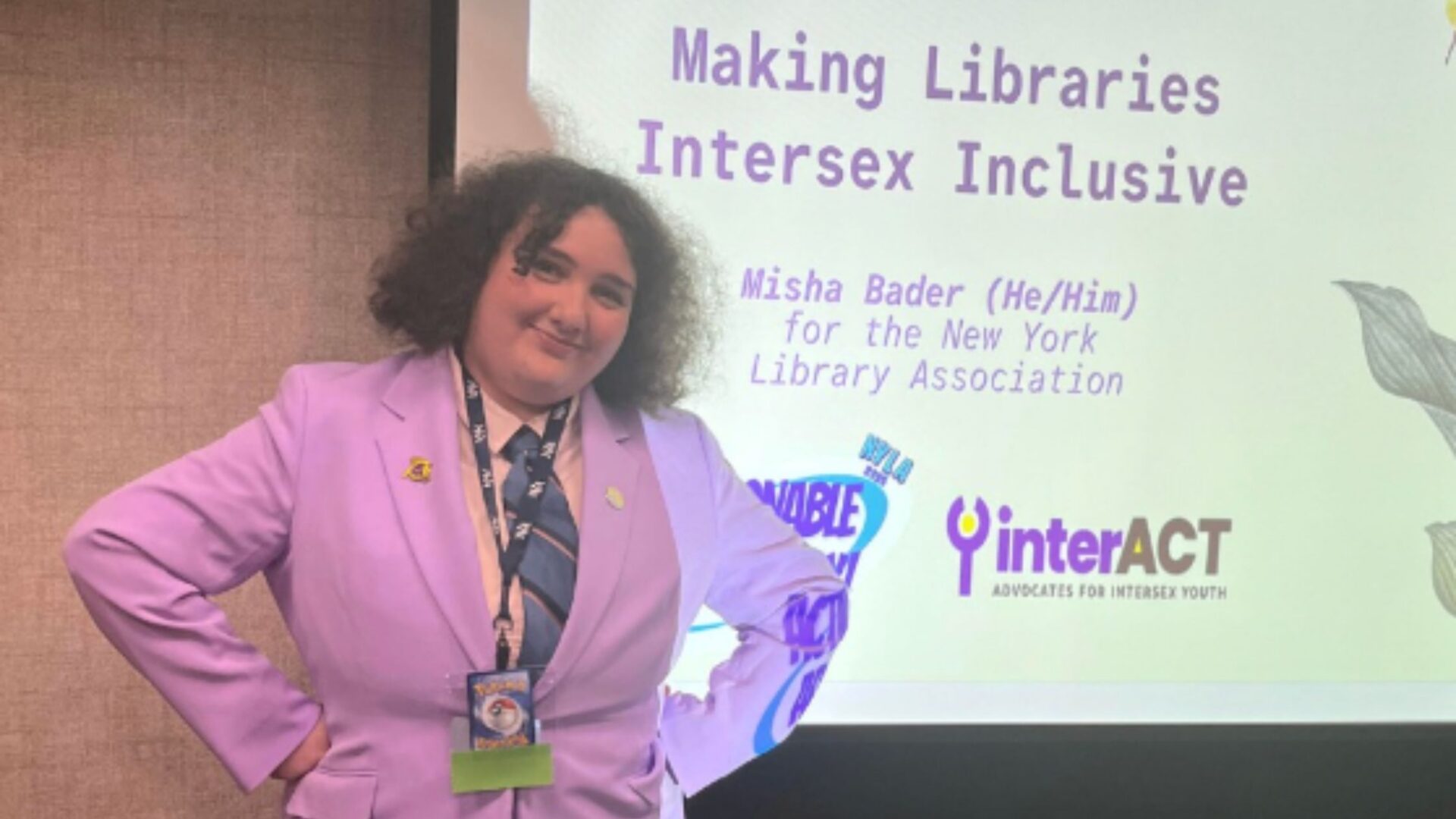
Misha Bader (He/Him) is an intersex queer librarian in Upstate New York. He has CAH, and was a part of interACT’s 2025 Youth Cohort, wherein he researched and presented on the history of intersex discrimination and future inclusion in library catalogs and subject headings. When not working with libraries, Misha can be found playing life sim video games, drawing fantastical characters, and spending time with his miniature dachshund.
Hi there! I’m Misha. I was born with CAH, or Congenital Adrenal Hyperplasia. CAH is one of the most common intersex variations, and June is CAH Awareness Month.
I learned that I had CAH by that name when I was an adult, but I had been treated for the symptoms since I was a child—without being fully informed what was happening to my body. I was the tallest kid in elementary school, but by the time I hit middle school, I was one of the shorter kids. I was hairier than most of the cis boys in my school, and I stopped menstruating a few years after my precocious puberty.
I personally never felt upset at how my body developed this way. However, I was upset that I was coercively treated for these factors. I was put on estrogen and progesterone, which made me feel very sick, and I remember going through genital exams with doctors and their students analyzing me like I was some kind of lab rat. These factors felt a lot more dehumanizing than my natural body ever did.
I remember discussing these things with friends because I thought it was a normal experience growing up, only to learn that it frightened them and was decidedly unusual. That was when I was finally able to put the label “intersex” to my experience.
It was only after that point that I was able to move to a more metropolitan area in my adult life, and I was able to find good endocrinologists who haven’t forced me down a conformist path. I’m now able to enjoy a much higher quality of living. I just graduated with my Master’s in library science, and I want to continue my work to make libraries and their collections intersex-inclusive.
I think people should know that, despite CAH being one of the most common intersex variations, it can manifest in a lot of different ways. Some of us deal with salt-wasting and adrenal crises; some of us deal with insulin resistance. Some of us deal with adrenal tumors, and others might not deal with any of these—they all can be CAH. We’re all unique human beings, and this diagnosis doesn’t cancel that out.
This is especially true when it comes to our self-autonomy, which many of us have been denied through non-consensual surgeries as children or infants, coercive hormone treatment like I faced, or the lack of visibility in identifying the way that feels right for us.
I’m proudly very queer and intersex, and having CAH is a big part of that identity. People with CAH may be cis women or men, they may be transgender or nonbinary, or identify in another way that speaks to them best. No one else can determine this for you, no matter if you have CAH or not.
I invite you this CAH Awareness Month to share this post and raise awareness about my variation, and the non-consensual surgeries and treatments that folks with CAH and other intersex variations face.
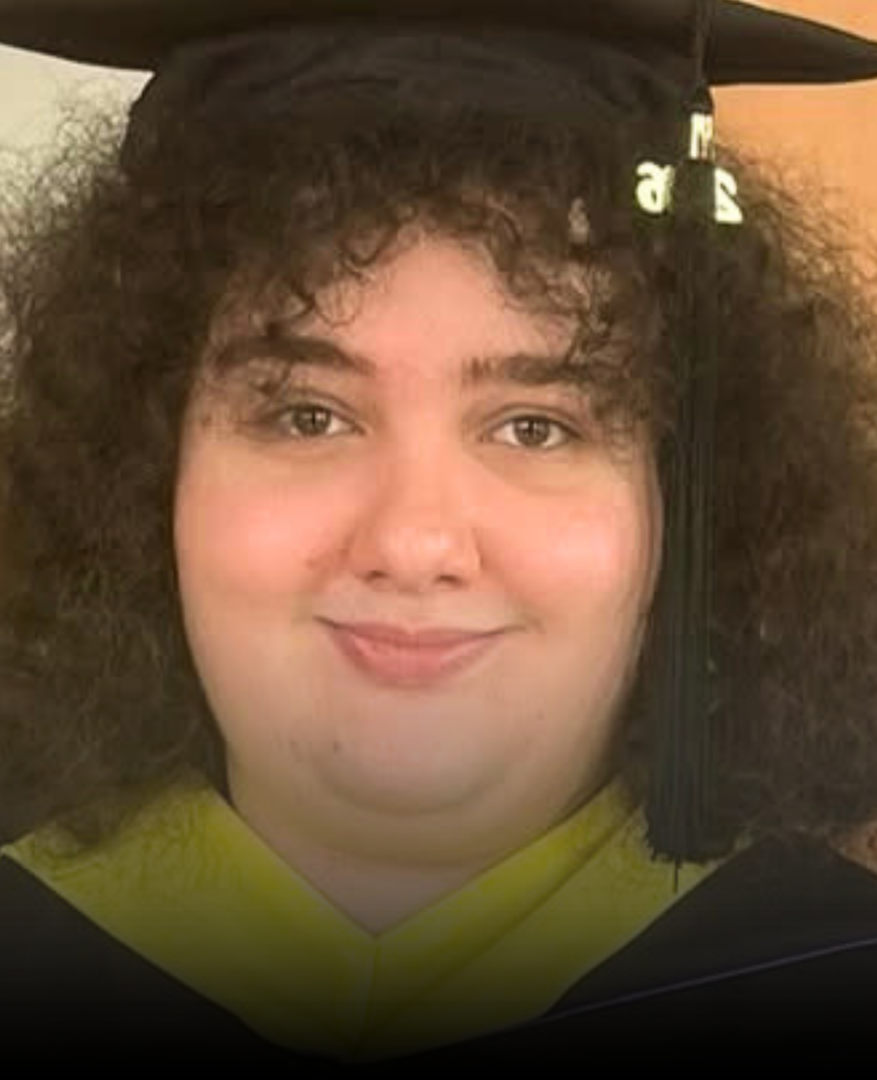
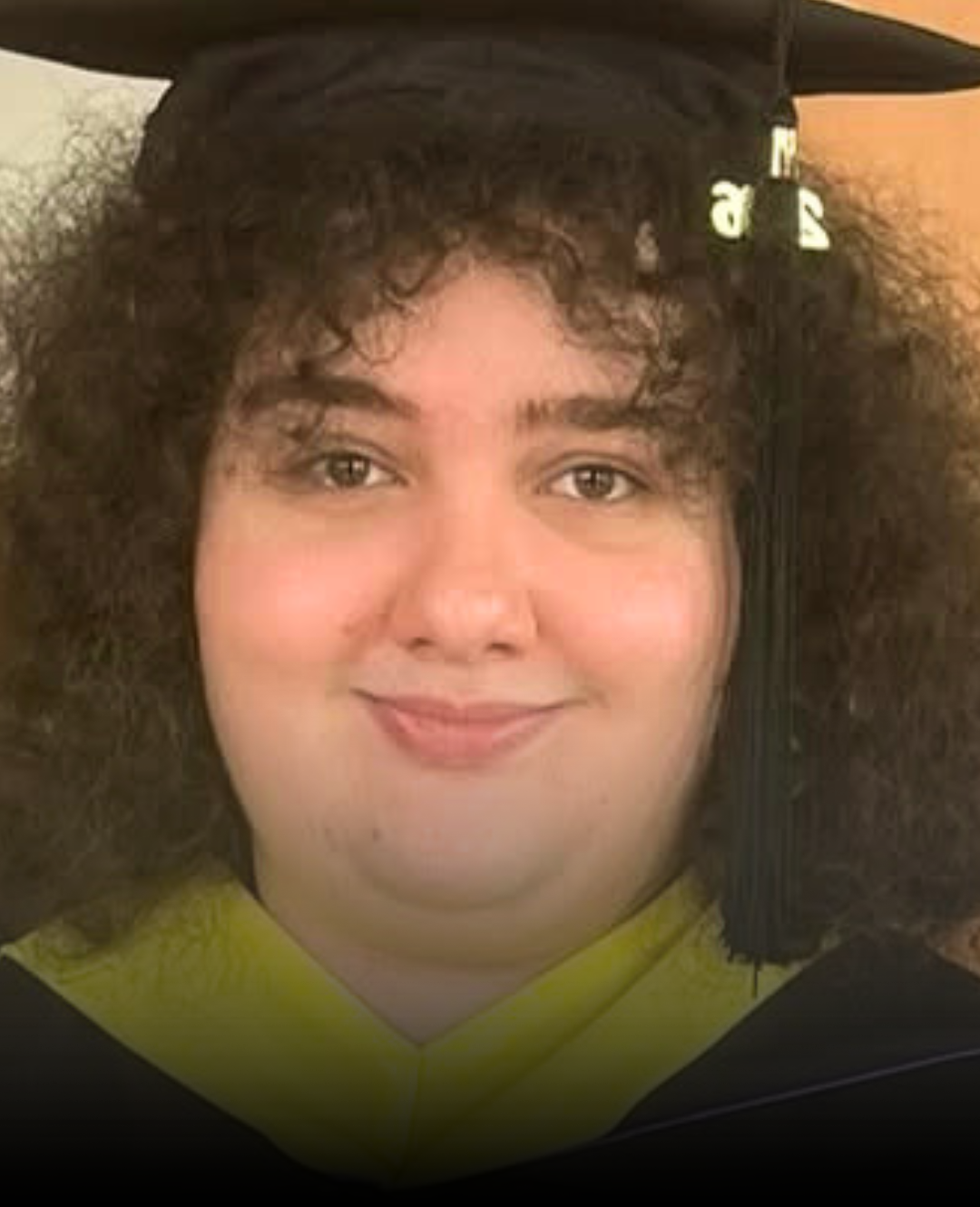
Misha at graduation
Want to see more stories like this?
interACT believes every intersex person deserves justice, and that only through ending interphobic legislation and intersex medical harm can we find justice under the law. Our work includes assisting the efforts of intersex activists like Misha, as well as engaging directly with policy makers. You can help create a different future for intersex youth by giving here.