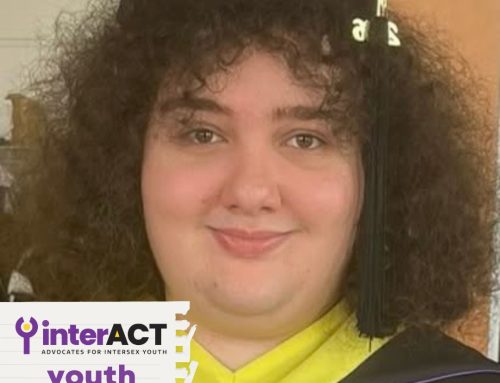
Rainii is an autistic intersex person who likes to make art and talk about intersex and disability awareness. Rainii does their best to spread positivity and joy in their work and is excited to share with others!
I first learned I was intersex from a doctor.
Well, more like multiple doctors, multiple times, at multiple different facilities. And they didn’t use the word “intersex” – They used “irregular growth of genitalia”, “hypoplastic uterus”, “gynecomastia”, “chordee”, “hyperandrogenism”, and “disorder of sexual development (DSD)”.
I’ve seen over a hundred different doctors, and none of them can figure out exactly why my body developed the way it did or why it functions the way it does. I’ve seen just about every specialty there is at least once, often more. The only thing the doctors can really agree on is that my body did not develop “as expected”.
Just as curious as the doctors
I’m not just intersex—I am also disabled. I was diagnosed with autism as well as a learning disability, a speech disorder, and anxiety when I was about six years old. As a kid, I was always sick with something or other, most often chronic rashes and some sort of viral illness. Like most of my family, I was born with hypermobile joints and stretchy skin. At age 22, I live with a variety of degenerative musculoskeletal problems, gastrointestinal issues, and chronic pain.
All this to say, I go to the doctor a lot – many different doctors for many different things.
Like other intersex people, I also deal with quite a lot of questions when I go to the doctor’s, and, since I go so often, it gets rather draining and repetitive. Yes, I am on both Estrogen and Testosterone. No, I do not have testes or a uterus or ovaries. Yes, I likely have a prostate, or at least prostate tissue.
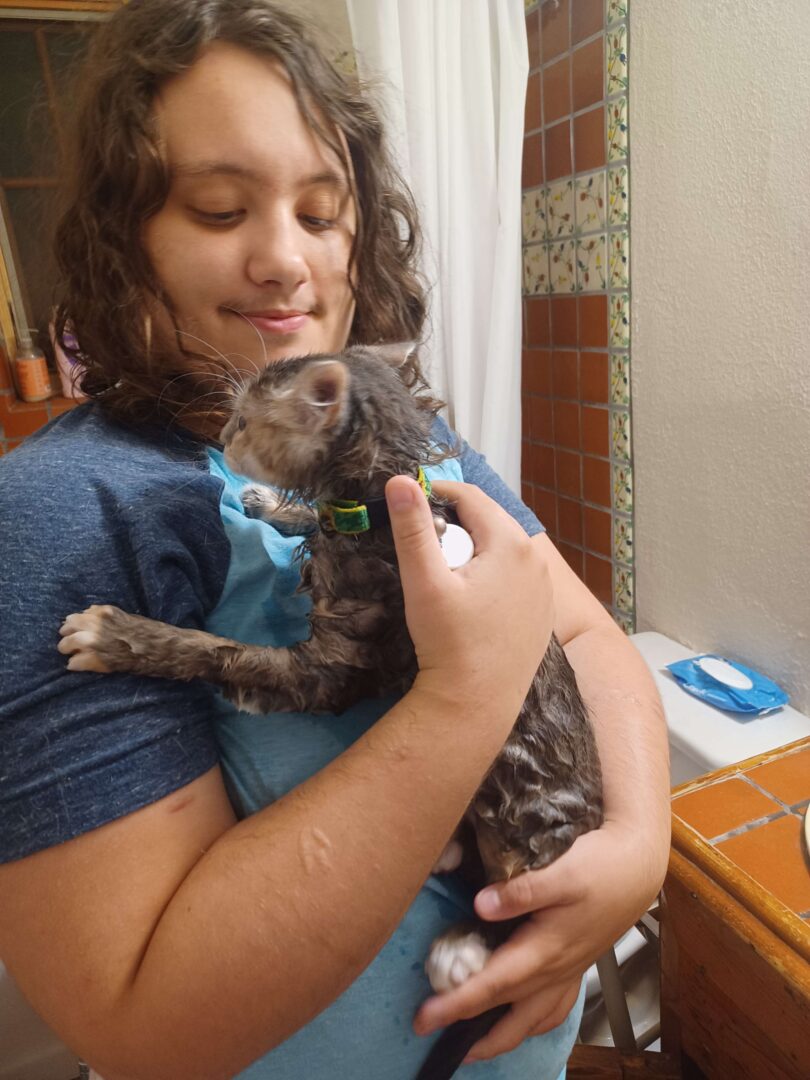
Rainii and intersex kitten Breezy
I wish I could skip these sets of questions, but it seems that my being intersex may very well be related to other facts about my body and my health (as well as my disabilities!). Admittedly, I myself am pretty curious about “why” I’m intersex, too. So I continue to go to clinics and hospitals, let the doctors run all their tests, and try to figure it out.
Intersex health matters. Intersex consent matters.
Intersex isn’t a disability or disorder by any means. But my own intersexuality is tied up in my disabilities and disorders. Talking about it can feel like betraying the community, because intersex traits themselves are natural, and looking different isn’t a disorder. But many of us, because of how our bodies developed, have health issues that matter, too.
I am still proud to be intersex. I will need to be on HRT for the rest of my life, and I personally welcome the HRT.
I had health issues directly related to my intersex variation. When I turned 18, I opted to have a total hysterectomy, and the reason why I had my uterus and gonads removed was largely because of the amount of pain and sickness they caused me, as they did not function well. Even though they were a part of my intersexuality, I am glad I had surgery – I was very sick and that surgery relieved a lot of pain for me.
What upset me is that I didn’t know my gonads were not actually two ovaries. What they handed back to me in a jar were ovotestes. I didn’t consent to having ovotestes removed; I consented to having two ovaries removed. Even when we as intersex people need surgeries or medications and even very much want them, the always-constant threat of intersex violence makes it difficult to know our bodies and be given access to full consent.
I am still proud to be intersex. I will need to be on HRT for the rest of my life, and I personally welcome the HRT – I have a lot of choice as to what feels right with my hormones and where I want my levels to be at, and that’s not something that everyone gets to have. At the same time, I am dealing with a lot of grief over having to navigate a medical system that does not work for me.
Healthcare on a pedestal
My story is not unique; there are many other intersex people not offered informed consent. There are also many disabled intersex people like me. We see many doctors and get many tests. We have bodies that work in ways that medical knowledge just hasn’t quite caught up to yet. We want to know even the most basic facts about our bodies and, most frustratingly, get no answers despite all of the effort. There are many disabled and intersex people who need medical care but can’t access it, and may never be able to.
When, as a disabled person, you’re not able to get any answers and are not given any good options or support, it’s very easy to feel like you’re getting nowhere. You might even worry that if another test comes back negative, you must not really be that disabled or sick (even if your body certainly knows otherwise!).
Health is put on a pedestal societally, something seen to be constantly striving for. It’s easy to feel like you should be giving up all your time to doctors and tests. You must dedicate yourself to being very accessible for more medical visits. It took me a long time to realize that the constant appointments and tests were leaving me in a chronic state of burnout and stress, and even longer to realize that I could schedule my appointments further out than the soonest available. It doesn’t mean I don’t want to feel better or figure out what’s going on.
Many people view health as something you need to “take control of.” There’s this pressure to constantly be working towards health, even for folks like me who will never actually achieve that idea of “health”. It places disabled and chronically ill people in this position of constant strain and expectation, of needing to do everything to “get better”. It’s assumed that disability and illness are something we should “naturally” desire to escape from, and that we should be doing everything in our power to do so.

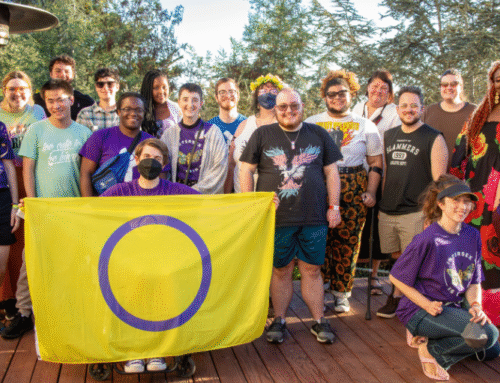
Rainii at interACT’s Healing Retreat
I just want to know what’s going on in my body and be given access to a variety of informed choices for what to do about it, including nothing at all.
Personally, I don’t necessarily want to be less disabled. I have a lot of love for my life as a disabled person and wouldn’t change that for the world (though I do wish I didn’t have so much pain in my back). I can’t imagine a life as an able-bodied person—I’d be a different person in different communities, and I love who I am now and the people around me. What I don’t like is every aspect of me, including both my intersex traits and my disability, being pathologized.
I just want to know what’s going on in my body and be given access to a variety of informed choices for what to do about it, including nothing at all. Unfortunately, it seems that right now the only option for answers I have is a medical system that doesn’t work for me. I have to design a lot of my own creative solutions for what to do with the mysteries of my body and its degeneration and sickness.
Can we break free from medical systems?
So what are we as disabled people to do when many of us have few choices besides relying on medical institutions, which do not always have our best interests in mind? Especially when we are simultaneously intersex, and many of us have histories of medical betrayal and coercion? Especially when the reason many intersex people rely on medical institutions in the first place is due to disability and injury caused by those same institutions? The lack of transparency I experienced from providers about my intersex variation makes it hard to trust providers.
I find that many answers lie in community and solidarity. It is vital that we find creative ways to navigate our circumstances and create change. That can look like spaces for the intersex community (interSpace and InterConnect) and solidarity with disabled and transgender communities—especially when we overlap so often. We must care for each other and find even more ways to accommodate each other.
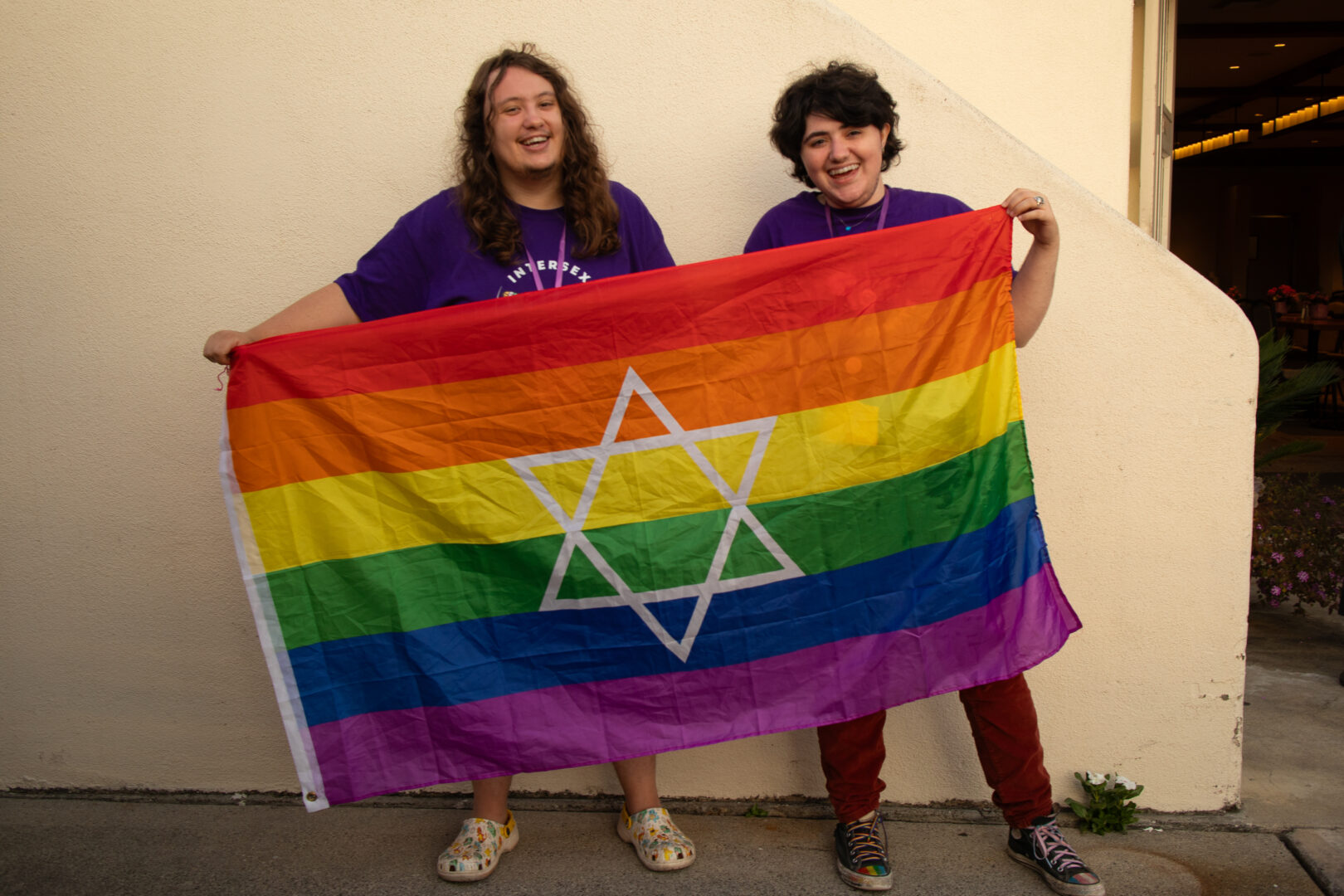
Rainii and partner Bat
We must create better tools to help each other, create more accessible information and resources, and remind each other and ourselves to care for our bodies and minds (in whatever way that looks like, and with our disabilities and limits in mind). If we can’t afford disability aids or treatment, the community should come together to help, both in financial aid and in fighting to make these affordable for everyone by default. We must share our experiences, speak out about mistreatment and abuse, and show up for each other.
Finally, we need to welcome and embrace the overlap between disability and intersex variations. We must break down the barrier of shame that many intersex people experience about also being disabled. Having a disability doesn’t mean your body is “wrong” or should be pathologized or forced into treatment — it just describes you. Medical autonomy is for all, regardless of whether we are intersex and disabled, disordered, or sick due to it, or if we are simply intersex.
Read more about ovotestes in our glossary, and more from youth member Courtney in “7 Disabled Intersex People Explain How They Embrace Their Identities.”
Want to see more stories like this?
At interACT, we believe intersex youth deserve to be heard and paid for their labor. That’s why we compensate every young person who shares their story. If you believe in resourcing intersex youth leadership and uplifting their voices, please consider making a donation today. Your support helps ensure youth like Rainii can keep telling their stories and shaping the intersex futures.