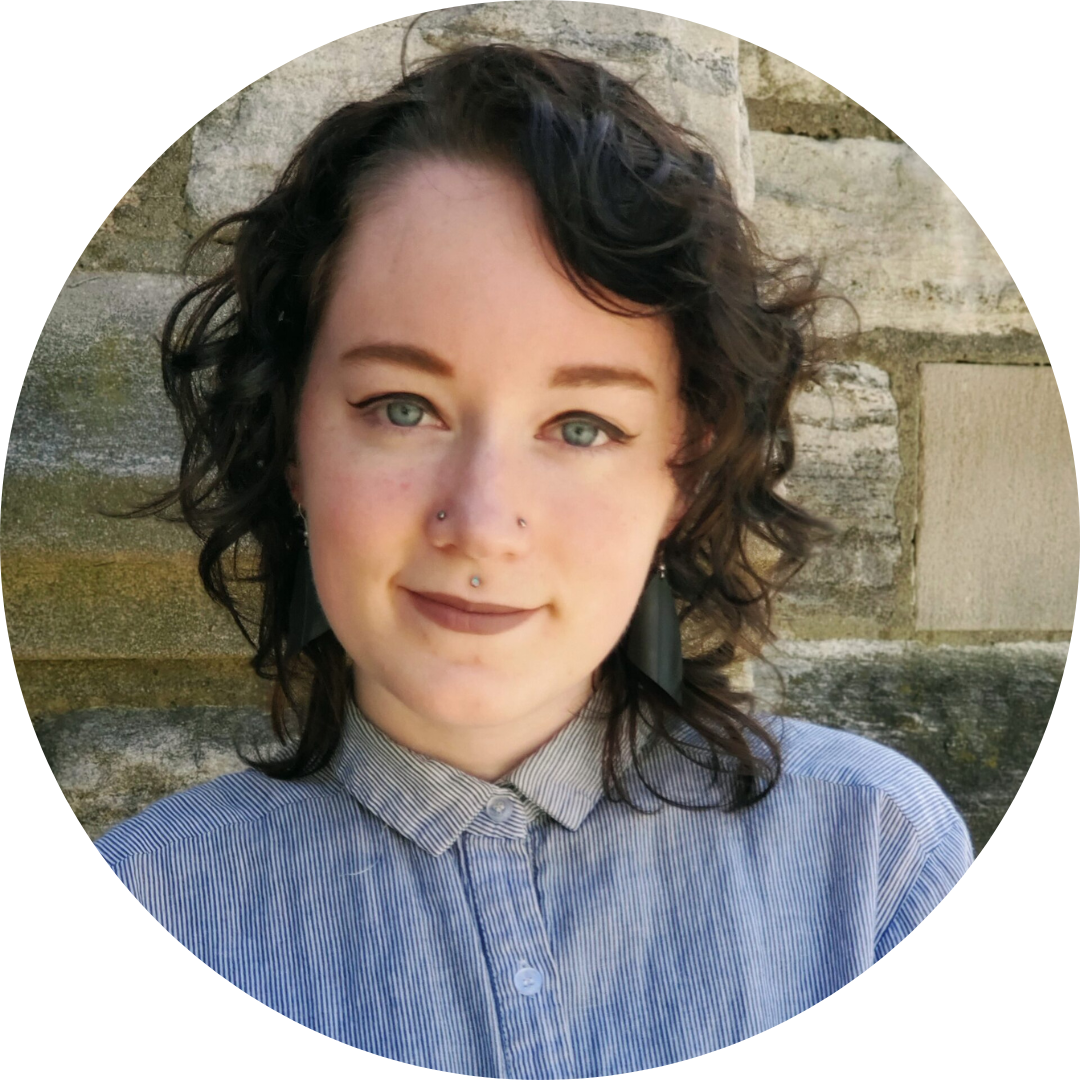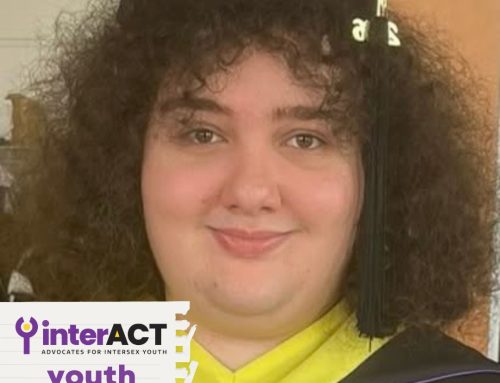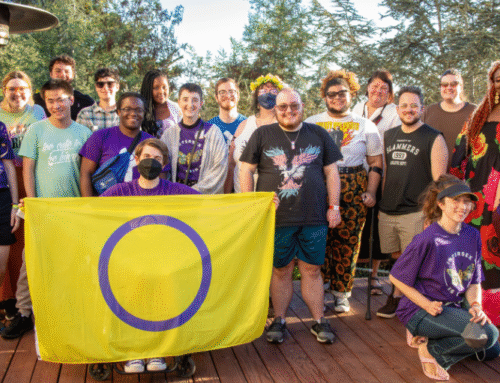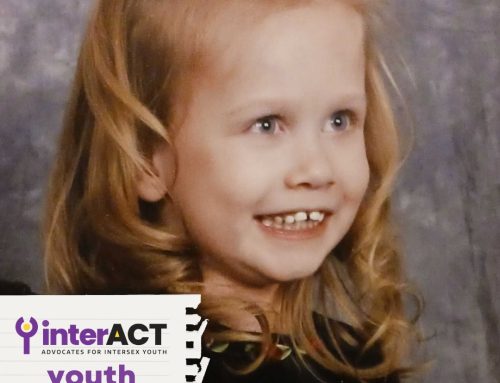

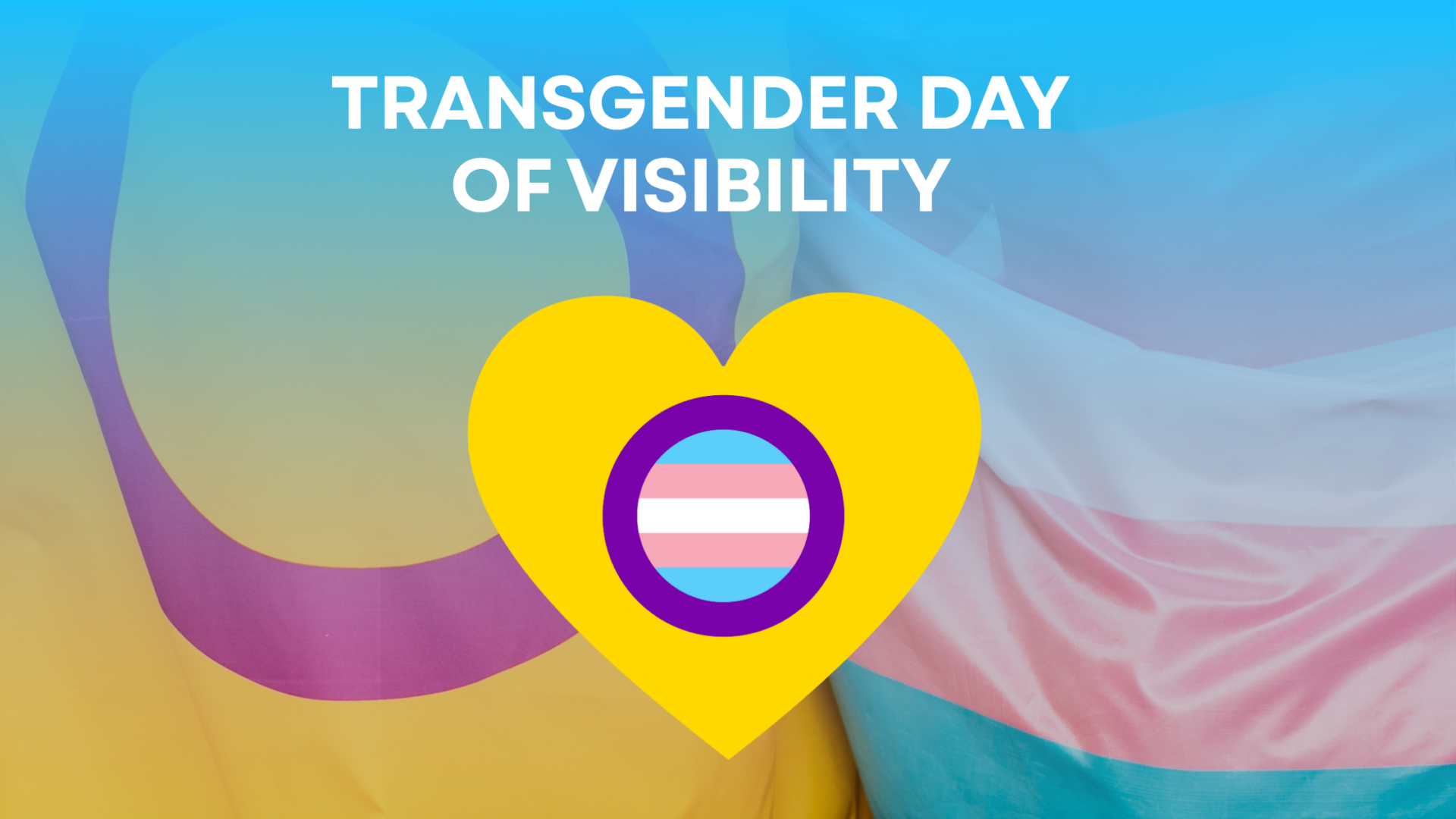
This Trans Day of Visibility, meet intersex people who are also transgender.
Today is the International Transgender Day of Visibility (TDOV). Each year on March 31, we observe TDOV to celebrate the lives of transgender people. The day also brings attention to the discrimination, misunderstanding and threats to safety that transgender people still face.
Transgender and intersex are different. Transgender people have a gender identity that is different from the gender they were thought to be when they were born. Intersex people are born with physical variations (like in their chromosomes, hormones or reproductive anatomy) that don’t fit neatly into binary sex categories.
Are intersex people also transgender? Not necessarily, but they can be. Gender is a complex set of relationships about personal identity, a person’s relationship to their body, and to the world around them. Many intersex people aren’t transgender—they are cisgender women or men. Some intersex people also just happen to be transgender in addition to being born with physical differences. For others, their gender identities are linked to being intersex.
Intersex and transgender people both challenge the idea of a clear-cut sex and gender binary. People who are both intersex and transgender live at an intersection. For this Transgender Day of Visibility, we talked to intersex people who are also transgender about their lives.
Interviews have been edited for length.
What’s the first time you remember seeing or meeting someone like you and how did you feel?
Jordan: The first time I met another trans person was in high school, and I remember feeling weirdly similar and different at the same time. They weren’t intersex, and I didn’t know I was at that point. I could relate to him and connect when it came to identity, but when it came to the physical aspect, there were all kinds of strange discrepancies that alienated me.
Ly: The first time I met another trans intersex person who had my same experience was life-changing. Often in trans spaces, I felt I had to be intersex-first, since so few people knew about us. Meeting Elliott was like being able to breathe for the first time. It was so validating to just be able to Be Trans without having to explain the extra parts.
Apollo: I made friends with another person with my intersex variation at 15 years old, and it was really fun to bond over our shared hobbies. Not long after, I met a trans man for the first time through social media. Through learning about his experiences, and that of other trans people over the following year, I realized that I had been struggling with gender dysphoria for many years.
Myrtle: I remember my first exposure to other intersex people being r/Intersex; I had come across the sub[reddit] after doing research on my body’s symptoms. The moment I read that PCOS was accepted as an intersex condition by the community, I felt seen. Suddenly, everything fell into place- I understood myself so much more than I ever thought I could.
How do you define your gender? Are your intersex variation and transgender identity related or separate?
Nessa Calvin: I would say my variation and my gender are separate, though living with a visibly different body from the time I was a child did help prepare me for the scrutiny I’d be under, growing up into a nonbinary adult. That said, it’s impossible to extricate my intersexness from the act of my transition. Medical transition made me more in-tune with my body, and has helped me gain a better understanding of what it’s capable of. I didn’t react to hormone replacement in a way anyone expected I would! Being intersex has taught me to love myself as a trans person, and being trans has taught me to love myself as an intersex person.
Jordan: I typically just call myself a man in day-to-day life, and an intersex trans man in spaces where that’s appropriate. They’re very tightly linked for me, and separate at the same time. I think they influence and impact each other intensely, but in the end, are still separate for me in their own right, with their own issues, struggles, and communities.
Myrtle: I identify as transgender & nonbinary. I’d say there is a direct correlation between my intersex condition & my gender identity due to the experiences I’d had medically my entire life being so similar to that of a trans person’s. I’ve been both E[strogen] and T[estosterone] dominant at different times in my life.
Apollo: I’m an intersex trans masc. I’ve known that I’m intersex since I was 9, and that I’m trans since I was 17, so they have always been distinct parts of who I am. However, they have intersecting roles. Gender diverse people of all identities or expressions are more invisible in the community for my intersex variation, so it’s harder to find others like me. Additionally, in the larger community of trans men and trans mascs as a whole, they had very different experiences with puberty than I did, and I don’t have the same healthcare needs as them.
What’s one misconception people have about transgender/intersex people you want to myth-bust?
Jordan: That being intersex is some unfair advantage in transitioning. There’s this idea that being intersex is “lucky” and always beneficial, but that really isn’t the case.
Myrtle: Honestly, I really wish PCOS was more widely recognized as an intersex condition. My life experience aligns so closely with other intersex individuals with different variations, but the general public doesn’t quite understand enough about PCOS & I’d like that to change.
Apollo: Even if we have overlapping experiences with discrimination or marginalization, it’s important to highlight our differences so that we can better support one another! I don’t have the same healthcare needs as an endosex trans man, but I still need the same access to gender inclusive specialists that won’t disrespect or harm me.
What do you want allies to know about how to support transgender and intersex people in this moment?
Myrtle: Keeping up with your local politics is the best way to support us—specifically, look out for anything that impacts gender-affirming care. Be our voice; not many of us have the privilege to speak up for ourselves.
Apollo: Read about intersex and trans people throughout history so you can be informed on how to advocate for awareness and justice!
Jordan: Listen to trans and intersex voices, even if it counters your own preconceptions.
What do you think you being visible offers to other intersex and transgender people?
Apollo: It offers hope. It helps you feel less alone in the world.
Myrtle: Just like with my experience—answers. Solutions. Treatment options. Explanations. Relief. Reassurance. A label that they may find fits their experience. A community they never knew they were a part of until now.
Jordan: While I’m not out and visible myself in daily life, those who are serve as proof. Proof to other intersex and transgender people that we exist, that we can live life the way we dream it, that there’s a place in the world for us.
What advice would you give other intersex people exploring their gender?
Myrtle: Your body developed differently than the average person, but that doesn’t necessarily have to directly correlate to how you see yourself in your own mind. Don’t think too hard about the relationship between intersex & trans identities; you’re valid regardless of what you discover about yourself & your body.
Jordan: Take your time and don’t be afraid to experiment. You don’t have to have it perfect the first time.
Apollo: There isn’t an easy blueprint to identity, so there’s no rush, even if it feels like there’s one. And as long as you’re alive on Planet Earth, it’s never “too late” to figure out who you are. There’s also so, SO many people out there that you can connect with over your experiences, and it’s important to feel supported when you’re trying to learn who you are.
What’s something about you that brings you joy in your life?
Jordan: I love my voice and its evolution.
Myrtle: My resilience, my desire to conquer fear & ease of adapting to change. I’ve been able to have so many wonderful life experiences all because I faced something unknown & forged my own path through it, regardless of what it entailed.
Apollo: My intersex body brings me joy, because it’s always felt like mine, and it empowered me to always advocate for my own happiness!
When intersex youth speak their truth, live out loud, and celebrate visibility, it helps others feel safe enough to speak up, too.
Stand with intersex & transgender youth: make a donation today to help resource their voices and sustain their advocacy.