
Intersex Healthcare
Intersex people have unique healthcare needs, but still face discrimination in doctors’ offices, a lack of knowledgeable care, and medical mistreatment. There is a long history of medical abuse in attempts to prevent or “cure” intersex differences. Intersex infants and children are still subjected to nonconsensual surgeries; non-lifesaving procedures to change natural variations in genital appearance or reproductive anatomy. These surgeries can result in serious lifelong emotional and physical consequences and high complication rates. Attempts to “fix” intersex differences are rooted in ideas about gender and sexuality, and what “normal” looks like.
interACT believes all intersex people deserve respectful, knowledgeable, and consensual healthcare. We offer guides for providers looking to improve intersex care, policy recommendations for hospitals, and guidance for intersex people and their families as they advocate for their own care.
Resources for Providers

Advancing Health Equity for Intersex Individuals
Released by the Department of Health and Human Services with support from interACT and intersex community members
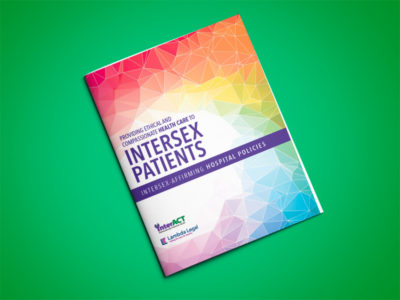
Intersex-Affirming Hospital Policy Guide
with Lambda Legal
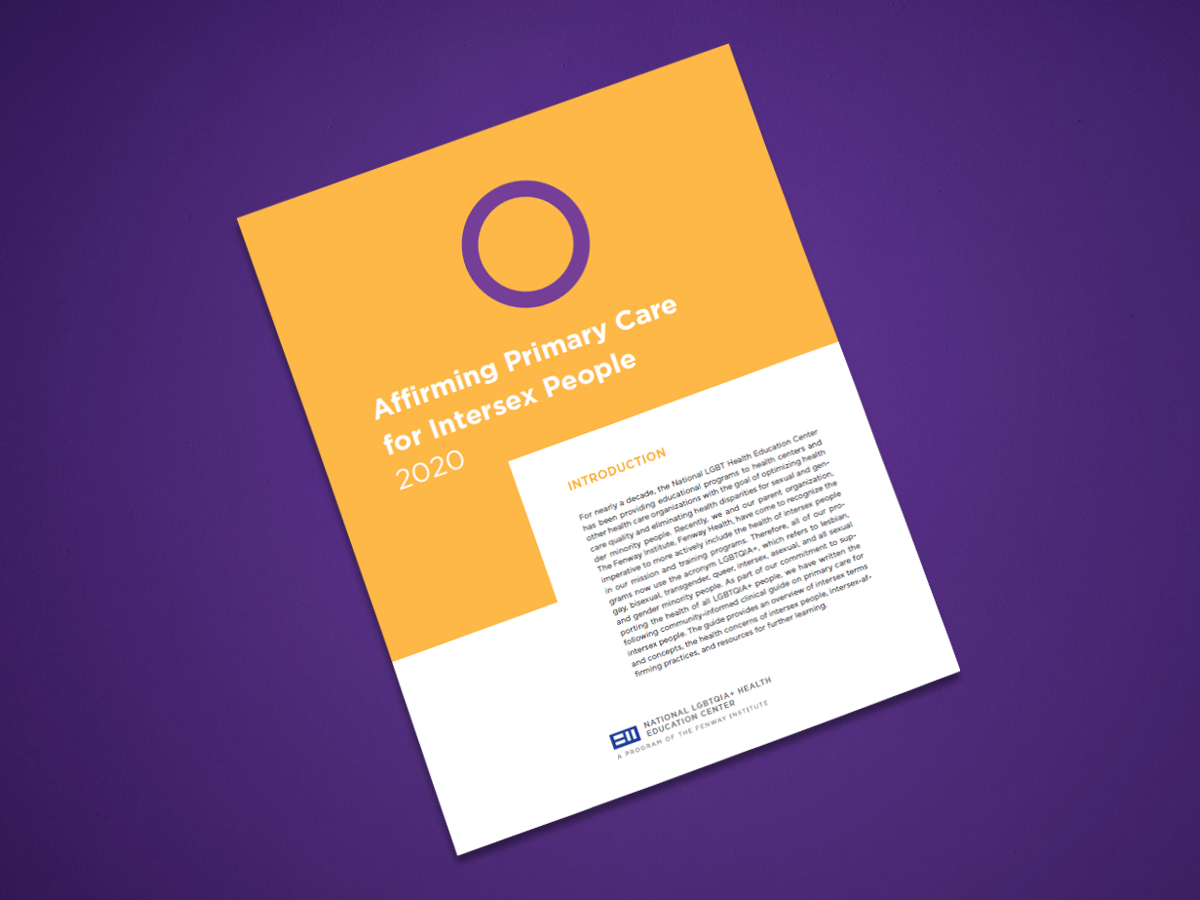
Affirming Primary Care for Intersex People
with the National LGBTQIA+ Health Education Center


What We Wish Our Doctors Knew
| Other Language | Translation By |
|---|---|
| русский язык | Intersex Russia |
| ελληνικά | Intersex Greece |
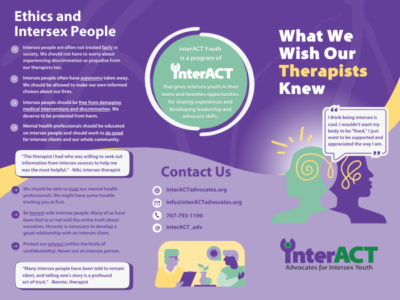
Medical Resources for Intersex People and Their Families

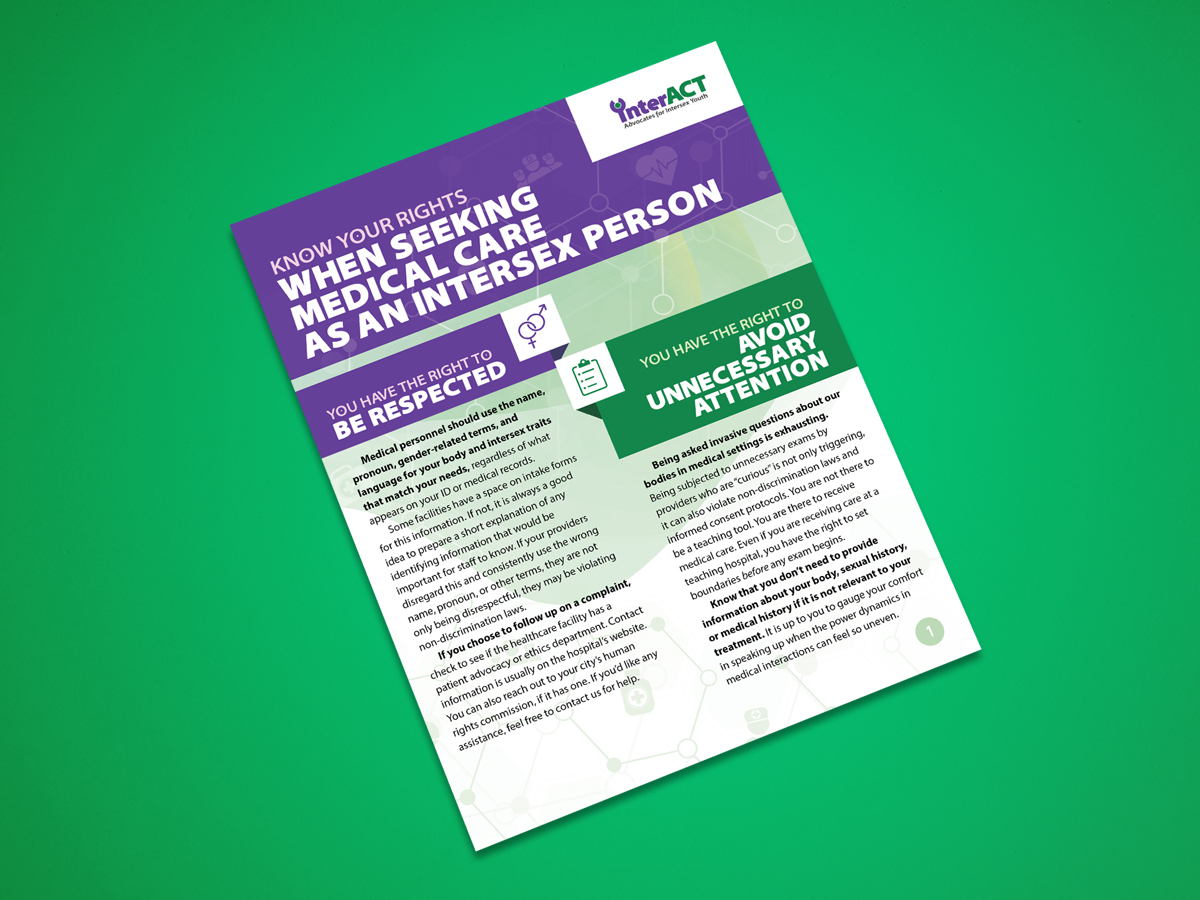
Know Your Rights: Seeking Medical Care as an Intersex Person
| Other Language | Translation By |
|---|---|
| Español | Brújula Intersexual |

The Intersex Guide to Managing Periods
By Youth member Nessa Calvin

Body Map (for pregnancy and birth)
Resource by Transparent Change
Outside Medical Resources
Disclaimer: Some of these resources may use medical terminology that is not used or preferred by intersex people, but provide useful introductions to clinical information for providers.