


Sam Sharpe hugs fellow athletes at a swim meet
Athletes who are intersex deserve the fun, confidence, and friendship that sports can provide, like anyone else. Throughout the history of sports, many women suspected to be intersex have been subjected to invasive “sex testing.” Women in sports who are perceived as not being “woman enough” have been forced to alter their bodies to be allowed to play. Black and Brown women from the Global South are especially scrutinized.
This playbook is now being used to target transgender girls and women. Increasingly, bills and policies are attempting to restrict transgender and intersex girls and women from playing the sport they love. These bills fail to understand that sex and gender are complex; many attempt to define womanhood by genetics, reproductive anatomy, and hormones. They create strict and unscientific sex categories that many intersex people, especially girls and women, do not fit into. This threatens their access to their sport, both at competitive levels and for K-12 students.
Sports bans require sex testing to enforce, and are privacy threats to all girls and women in sports. Strict “sex”-based sports policies encourage harassment, scrutiny of women’s and girls’ bodies, and invasive exams such as DNA tests that violate students’ privacy and dignity.
Read more stories from intersex athletes, fact sheets on Olympic competitions, and research on sex testing below.
Stories
- Intersex student athletes respond to new sports ban in Congress (2025)
- How trans sports bans threaten intersex athletes like me (2023)
Fact Sheets
- Fact Sheet for Reporters: “Sex Testing” in Sports by GLAAD and interACT (2025)
- FACT CHECK: Olympic Boxer Imane Khelif, Participation and Eligibility in the Paris 2024 Olympic Games, and Beyond by GLAAD and interACT (2023)
Books
Featured Resource

“They’re Chasing Us Away from Sport” Human Rights Violations in Sex Testing of Elite Women Athletes
Report by Human Rights Watch
Research
Media
Articles
- End Abusive Sex Testing for Women Athletes (2020)
- Caster Semenya loses appeal over testosterone rule (2020)
- Intersex Youth React to the Discriminatory Ruling Against Caster Semenya (2019)
- #HANDSOFFCASTER: Why the Policing of Female Athletes’ Testosterone Levels Needs to Stop (2019)
- The ignorance aimed at Caster Semenya flies in the face of the Olympic spirit (2016)
- Caster Semenya has stirring words for her critics after winning women’s 800m (2016)
- Bias Against Intersex Olympics Athletes Is What’s Unfair – Not These Athletes’ Bodies (2016)
- There should be no questions about Caster Semenya’s right to compete at the Olympics, say experts (2016)
- Women Athletes Gave Up Gonads And More To Continue Olympic Competition (2016)
- Dutee Chand’s early 100-meter exit says a lot about Caster Semenya (2016)
- Medical and Ethical Concerns Regarding Women with Hyperandrogenism and Elite Sport (2015)
interACT responds to Supreme Court: We won’t stop cheering for trans and intersex youth
For Immediate Release: June 30, 2026 Please contact Sylvan Fraser Anthony for further comment at sfraser@interactadvocates.org. Today's ruling is heartbreaking for the trans and intersex girls who want to play, learn, and thrive alongside
interACT Responds to New IOC Policy Discriminating Against Intersex Olympic Athletes
Press: media@interactadvocates.org March 26, 2026 - Today’s newly released policy by the International Olympic Committee (IOC) discriminates against transgender and intersex women with Olympic dreams through mandated sex testing that invades the privacy and

World Athletics’ forced “sex verification” violates the privacy of all women
World Athletics’ approach to “sex verification” through compulsory sex testing discriminatorily targets women, violating universal principles of equal access to sport. When women are subjected to invasive genetic testing, they are forced to
interACT Urges Opposition to the “Protection of Women and Girls in Sports Act of 2025” H.R.28
Today, Congress threatens to strip many intersex students, especially girls and women, of their right to play sports. Like similar statewide bills that seek to restrict sports participation based on vague definitions of "sex",
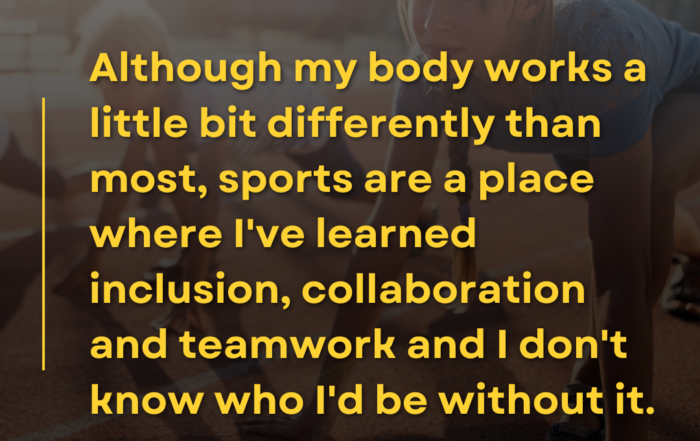
Intersex student athletes respond to new sports ban in Congress
Intersex students deserve the right to play sports with their peers—like any other student. They deserve the fun, confidence, and friendship that school sports can provide. Two newly-introduced bills in Congress that would restrict

Black Women’s Bodies Matter, Too
Algerian Olympic boxer Imane Khelif. Photo source: AL 24 News Guest post by Victoria Kirby York, the Director of Public Policy and Programs at the National Black Justice Collective. Imane Khelif,