

What is Intersex Awareness Day?
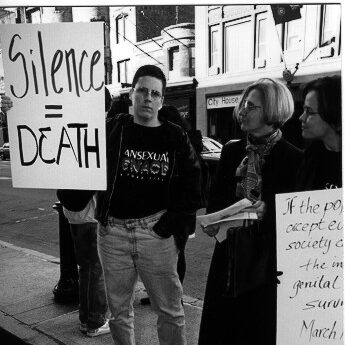
Thirty years ago, the intersex movement started with a protest. On October 26, 1996 members of the Intersex Society of North America and transgender allies arrived in Boston, MA at the annual conference of the American Academy of Pediatrics. They demonstrated and shared their pain in a very public way, denouncing nonconsensual infant genital surgeries and demanding the medical industry take notice. Doctors dismissed the activists as a vocal minority in a 1997 New York Times article covering the intersex action. A movement blossomed from that day, proving them very wrong.
Who are intersex people? Intersex people have variations in their bodies, like reproductive anatomy, hormones, or chromosomes, that don’t fit stereotypes of male or female bodies. Nearly 2% of all people are intersex. Some intersex traits are noticed at birth, others are not noticed until puberty or later in life. Intersex isn’t a disorder, just part of the natural variation of human bodies. Learn more in our FAQ.
Today, intersex people and our allies are following in their footsteps, organizing in cities around the U.S., and around the world. Intersex people have built visibility, connection, and made progress over the last thirty years.
Recognizing Intersex Awareness Day
Intersex Awareness Day History



Movement Towards Justice
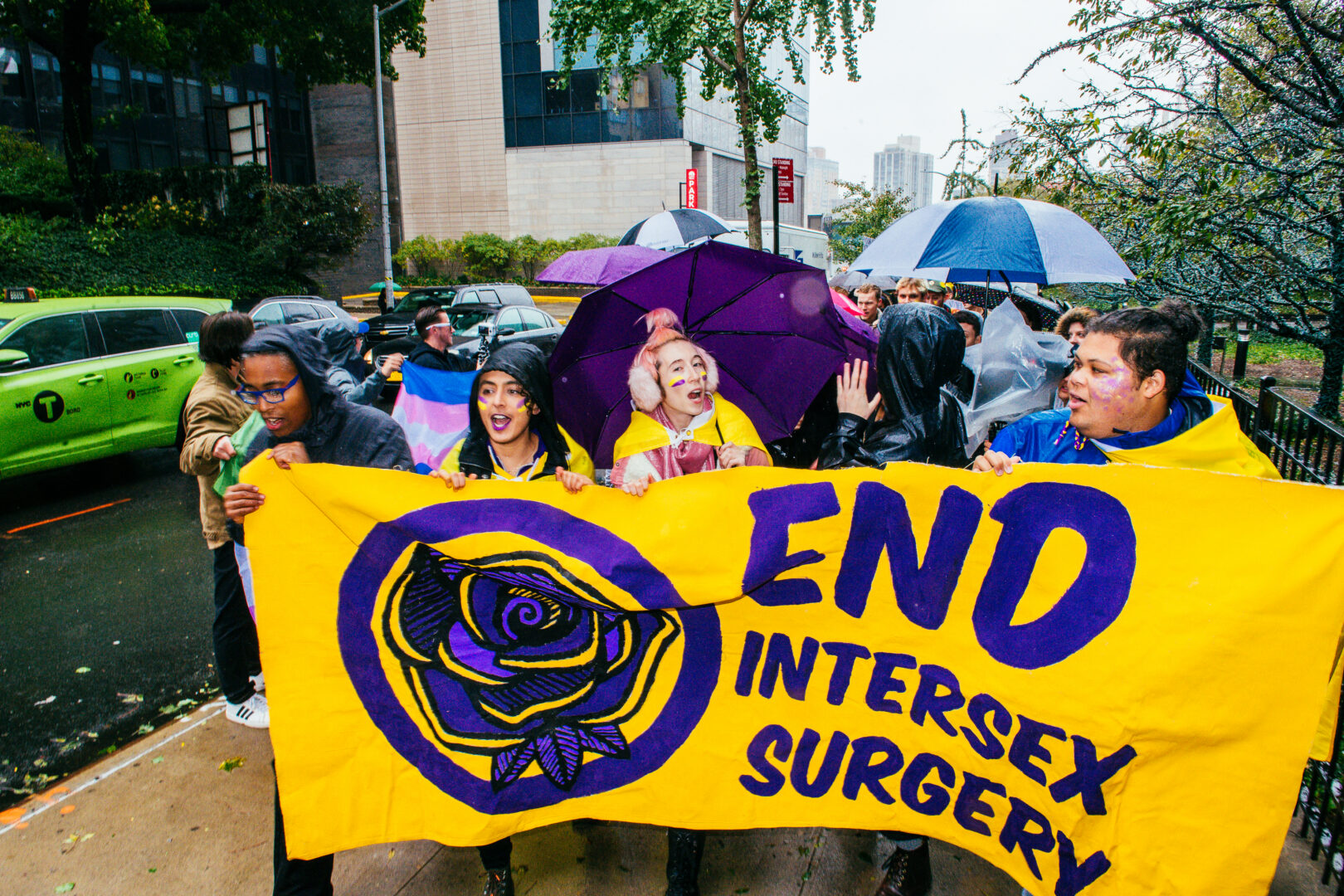
LGBT advocacy group Voices 4, intersex supermodel Hanne Gaby Odiele, Intersex Justice Project, and interACT teamed up in New York City to protest Dr. Dix Poppas, a leader in performing clitoral surgeries on minors.
On Intersex Awareness Day, we recognize the progress made for intersex rights.
We built a movement of youth advocates speaking worldwide about their lives, and shaming violence from medical institutions.
We gained support from the United Nations and U.S. Department of State. Over 30 medical associations, hospitals, human rights organizations, and government agencies have issued statements and resolutions against intersex surgeries.
We have won an apology from Lurie Children’s Hospital following ongoing demonstrations, and an end to many intersex surgeries at Boston Children’s Hospital. New York City Health and Hospitals now prohibits intersex surgery due to the work of activists.
However, the practice of nonconsensual infant surgery continues in the US, even as countries increasingly ban it. We need your support to make change.